
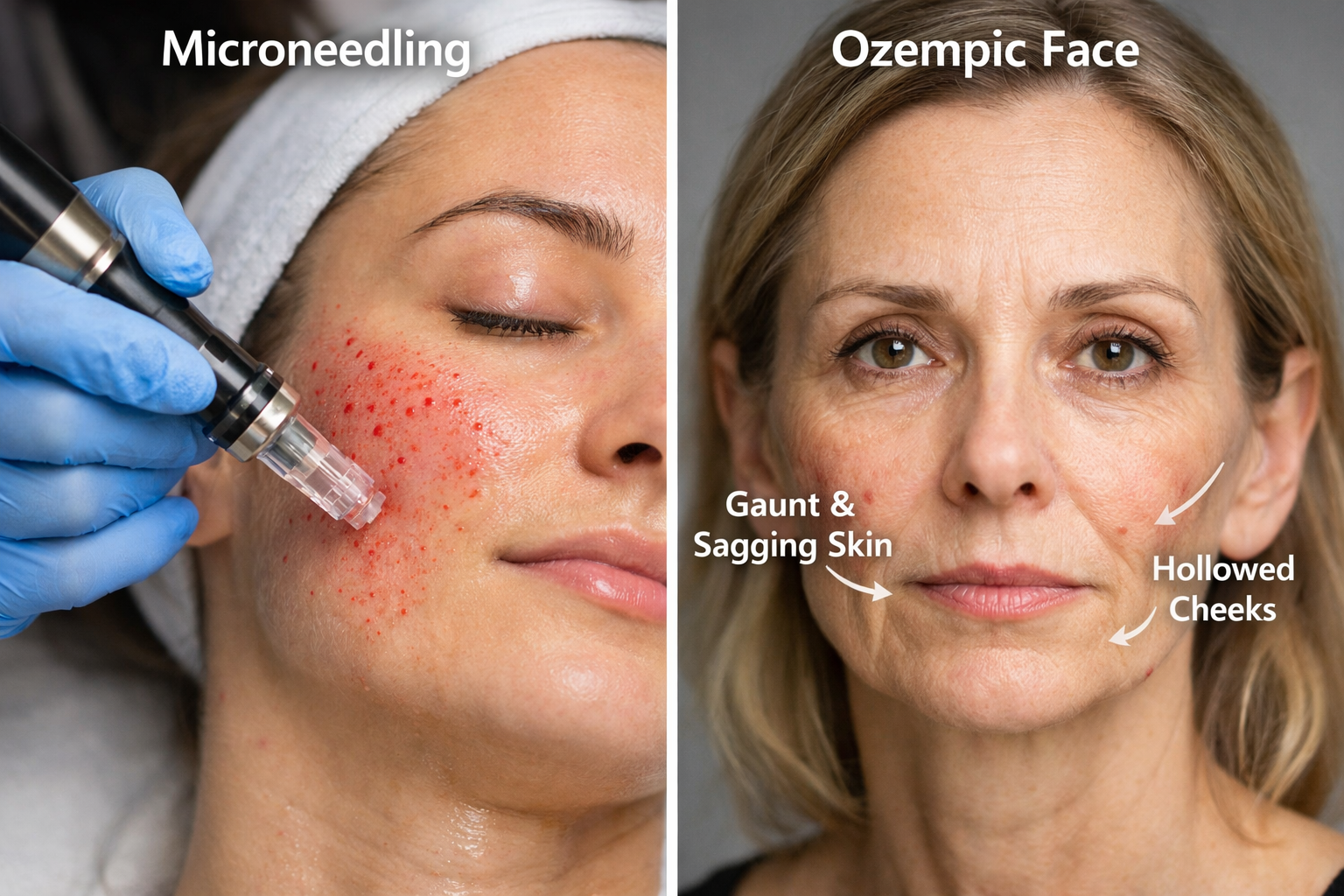
Ever heard of this? Well its when someone loses weight quickly, the face loses fat volume too. That means the natural fat pads that support the cheeks and jawline get smaller, and the skin suddenly has less structure underneath. It’s not damage — it’s biology. But it can make the face look more hollow or less firm.
So where does microneedling come in?
Microneedling creates tiny, controlled micro-channels in the skin. Your body responds by activating fibroblasts, the cells responsible for producing collagen and elastin. Over time, this can increase dermal thickness, improve elasticity, and help the skin sit more smoothly over a leaner facial structure.
What it doesn’t do is replace lost fat. It’s not a filler, and it won’t restore volume. Instead, think of it as improving the quality of the skin itself, making it stronger, firmer, and more resilient after weight loss.
Scientifically, the process triggers growth factors like PDGF and TGF-beta, which support collagen remodeling and tissue repair. That’s why a series of treatments, not just one session is usually where you see the biggest improvement in texture and firmness.
The key takeaway? Rapid fat loss changes structure, while microneedling improves skin quality. When used thoughtfully, it can help the face look healthier and more supported without changing your natural features.
Always consult with a qualified professional to make sure treatments are appropriate for you and aligned with your overall health goals.